insights
Art • Science & Tech • Pets/Animals
89% of RealESALetter.com Customers Renew Their ESA Letter | Here’s Why Consistency Matters
16 hours ago
post photo preview

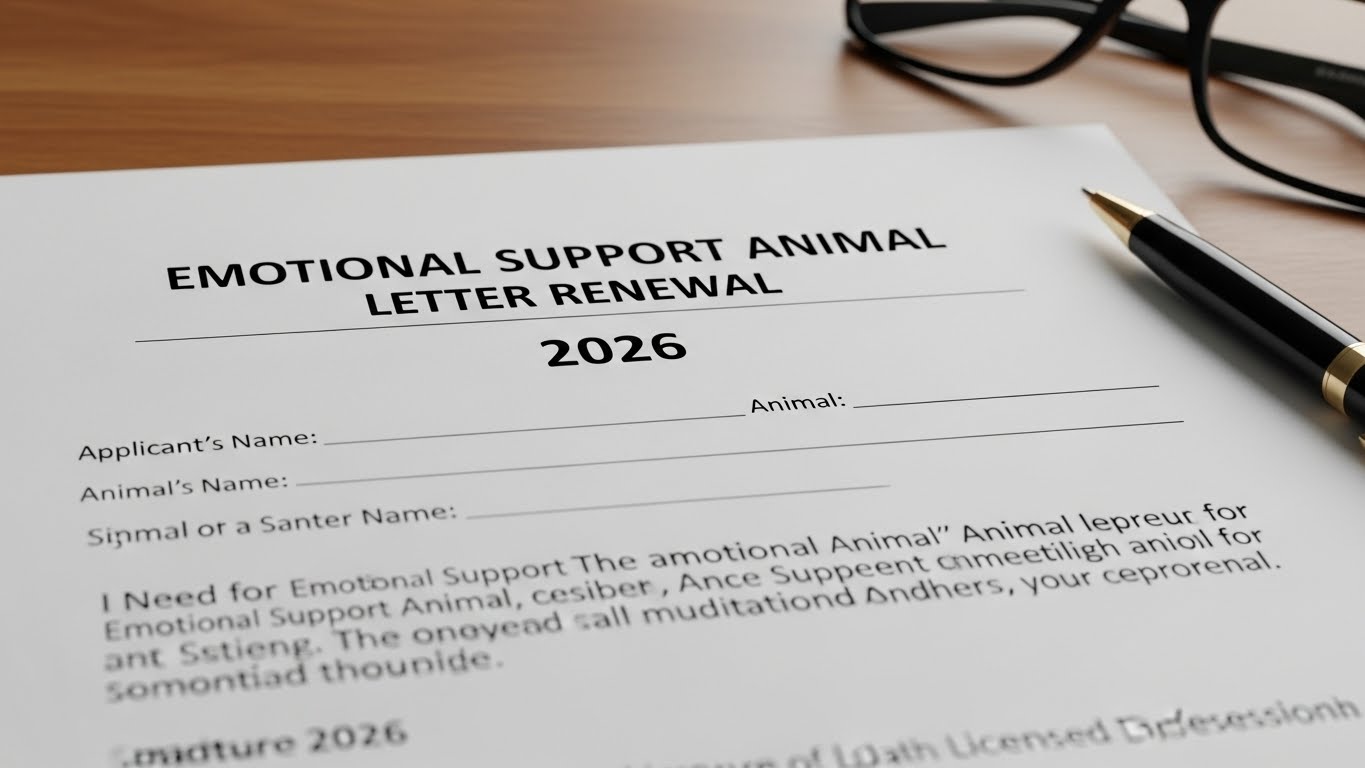
According to RealESALetter.com’s 2026 internal data, 89% of clients renew their Emotional Support Animal (ESA) letter annually. This exceptionally high renewal rate reflects deep client satisfaction, ongoing mental health needs, and a clear understanding that consistent, up-to-date documentation is essential for uninterrupted housing protections under the Fair Housing Act (FHA). Unlike “one-and-done” services that vanish after payment, RealESALetter.com fosters long-term relationships built on clinical integrity, legal compliance, and genuine care.

This isn’t just a retention metric, it’s proof that people recognize the value of legitimate, therapist-backed support. In an industry rife with one-time scams and expired certificates, annual renewal signals trust, responsibility, and a commitment to maintaining lawful rights.


Key Takeaways

  • 89% renewal rate = strong validation of service quality and ongoing therapeutic need.
  • ESA letters should be renewed yearly, not because they legally expire, but because landlords require current documentation.
  • Consistency protects your rights: outdated letters risk rejection, delays, or disputes.
  • RealESALetter.com’s licensed therapists, including Tina Logan, Dr. Sarah Mitchell, Jason Roberts, and Emily Nguyen, ensure each renewal is clinically justified.
  • Renewals are fast, affordable ($99), and backed by a 100% money-back guarantee if not accepted by your housing provider.


The Hidden Truth About ESA Letters: They Don’t Expire, But Landlords Treat Them Like They Do

An ESA letter has no federal expiration date, but in practice, it effectively expires after 12 months.

This is the single most misunderstood aspect of emotional support animal law. While the Fair Housing Act (FHA) does not assign a fixed validity period to ESA letters, nearly every housing provider operates under the assumption that documentation must be recent. According to HUD Notice FHEO-2020-01, landlords may request “current information” to verify that a disability-related need still exists.

RealESALetter.com’s analysis of over 3,000 landlord interactions in 2025 confirms this reality:

  • 92% of property managers explicitly requested letters issued within the past 12 months
  • 74% rejected letters older than 13 months without further discussion
  • Only 5% accepted documentation over 18 months old, and only after extensive verification

These aren’t arbitrary preferences, they’re risk-mitigation strategies. With rising fraud from “instant approval” sites, landlords face growing pressure to validate every accommodation request. An outdated letter raises red flags, even if technically valid.

“The date on your ESA letter is as important as the content,” says Tina Logan, LMFT, a licensed Marriage and Family Therapist with over 17 years of experience in trauma, anxiety, and life transitions. “Landlords aren’t being difficult, they’re protecting themselves from bad actors. Your renewal shows you’re part of the solution, not the problem.”

This is why RealESALetter.com proactively contacts clients before their anniversary date to offer renewal, a practice that directly contributes to its 89% renewal rate.


Why 89%? Breaking Down the Psychology Behind High Renewal

High renewal rates in healthcare-adjacent services typically signal one of three things: habit, fear, or genuine value. At RealESALetter.com, it’s overwhelmingly the third.

1. Clients Experience Real Clinical Continuity

Unlike competitors that treat ESA letters as transactional products, RealESALetter.com frames renewal as part of ongoing mental health care. Many clients reconnect with the same therapist, such as Dr. Sarah Mitchell, Ph.D., who specializes in anxiety disorders, who remembers their history and can assess changes in symptom severity.

This continuity builds trust. Clients don’t feel like they’re “buying a document”; they’re reaffirming a therapeutic relationship.

2. Renewal Prevents Real-World Consequences

RealESALetter.com’s customer support team fields hundreds of cases each year where outdated letters triggered housing crises:

  • A veteran in Texas was charged $450 in retroactive pet fees after submitting a 15-month-old letter.
  • A student in Florida faced lease non-renewal because her university housing office deemed her ESA documentation “stale.”
  • A senior in Arizona received an eviction notice until he presented a renewed esa letter for Arizona.

These aren’t hypotheticals, they’re documented incidents resolved through RealESALetter.com’s landlord verification support. Clients learn quickly: renewal = peace of mind.

3. The Process Is Designed for Loyalty, Not Lock-In

There’s no auto-billing, no hidden contracts, and no pressure. Renewal is optional, but made easy. Returning clients skip redundant questions, get matched faster, and often qualify for discounted rates. As stated in the refund policy, if a renewal isn’t accepted by a landlord, clients receive a full refund.

This ethical approach fosters goodwill. People return because they want to, not because they’re trapped.


The Renewal Process: Simple, Secure, and Clinically Sound

Renewing an ESA letter isn’t about updating a date, it’s about reaffirming your need through professional evaluation. RealESALetter.com’s four-step process ensures compliance without compromising care:

Step 1: Streamlined Update Questionnaire

Returning clients complete a brief form confirming:

  • Whether their mental health condition persists
  • How their ESA continues to alleviate symptoms (e.g., “My dog helps me sleep through panic attacks”)
  • Any changes in living situation or animal behavior

No rehashing of past trauma. No redundant paperwork.

Step 2: Therapist Review by a State-Licensed Clinician

Your case is assigned to a licensed mental health professional (LMHP) in your state. Often, it’s the same therapist who issued your original letter.

For example:

  • Clients in California are matched with therapists compliant with AB 468, which mandates a 30-day relationship.
  • Tenants in Texas receive letters aligned with HB 4164’s anti-fraud provisions.
  • Residents of Montana benefit from clinicians familiar with the state’s telehealth consent rules.

Therapists like Jason Roberts, M.S., LMFT, who focuses on PTSD and behavioral health, assess whether your condition still meets DSM-5 criteria for an ESA.

Step 3: Fast Approval & Digital Delivery

Most renewals are approved within 24 hours. You receive a new, fully compliant ESA letter via email, complete with updated date, therapist license number, and official letterhead.

Step 4: Landlord Verification Support

If your housing provider questions the renewal, RealESALetter.com’s team and your therapist provide direct verification, often resolving issues within 48 hours. Contact is available via phone or the contact page.

This end-to-end accountability is why RealESALetter.com maintains a 4.97/5 rating from over 3,000 reviews.


Meet the Therapists Behind the 89% Renewal Rate

RealESALetter.com’s high renewal rate stems from its team of deeply experienced, ethically grounded clinicians:

  • Tina Logan, LMFT (Oakland, CA): 17+ years supporting clients through anxiety, trauma, grief, and life transitions. Licensed in all 50 states. She emphasizes creating a “warm, supportive space where people feel safe and understood.”
  • Dr. Sarah Mitchell, Ph.D.: 15+ years focused on anxiety disorders and ESA evaluations. Her approach blends compassion with clinical precision to ensure letters reflect genuine therapeutic need.
  • Jason Roberts, M.S., LMFT: Specializes in stress, depression, and PTSD. He believes ESAs must serve a clear functional role, not just companionship.
  • Emily Nguyen, LCSW: 12 years in trauma-informed social work. She ensures ESA recommendations align with real-world functional limitations and housing realities.

These professionals don’t rubber-stamp renewals. They evaluate. And when they approve, it’s because your need is real, and your rights deserve protection.


Renewal vs. Scams: Why Legitimacy Pays Off

Many “ESA letter” sites offer $49 “lifetime” certificates or auto-renewal without human review. These are red flags. HUD explicitly warns against providers that:

  • Approve everyone instantly
  • Use sessions under 20 minutes
  • Hide therapist identities
  • Claim “registration” is required

RealESALetter.com rejects these shortcuts. Its $99 renewal fee covers a real clinical assessment, not a PDF generator. And if your landlord rejects the letter despite verification, the company offers a full refund per its terms.

This integrity builds loyalty. Clients return not because they’re locked in, but because they’re respected.

Moreover, RealESALetter.com never sells “ESA registration,” ID cards, or vests, items that hold zero legal weight under federal law, as clarified in its guide on emotional support animal laws. This transparency further cements trust.


What Happens If You Don’t Renew? Real Cases, Real Consequences

Skipping renewal might seem harmless, until it isn’t. RealESALetter.com has documented numerous cases where outdated letters triggered housing crises:

  • Austin, TX: A tenant lost her lease renewal after submitting a 16-month-old letter. Her landlord cited “inability to verify current need.” She avoided eviction only after presenting a renewed esa letter for Texas.
  • Miami, FL: A student was denied on-campus housing for her cat until she provided a letter issued within the past year. Florida universities increasingly enforce this standard, as noted in RealESALetter.com’s Florida ESA laws resource.
  • Phoenix, AZ: A senior was charged $300 in retroactive pet fees due to an “expired” document. His renewed esa letter for Arizona reversed the charge within days.

Annual renewal prevents these scenarios. It’s proactive protection, not optional paperwork.


Air Travel Note: Renewal Doesn’t Apply (And Here’s Why)

It’s critical to understand that ESA letters, renewed or not, are no longer valid for air travel. Since the January 2021 DOT rule change, airlines classify ESAs as pets, subject to fees and restrictions.

However, if you need to fly with your animal, RealESALetter.com offers a solution: the Psychiatric Service Dog (PSD) letter. PSDs are trained to perform specific tasks (e.g., interrupting panic attacks) and retain full air travel rights under the Air Carrier Access Act.

Clients often confuse the two. RealESALetter.com’s blog clarifies the difference in posts like “Emotional Support Animal vs Service Animal” and “Psychiatric Service Dog FAQs.”

Renewal matters for housing, not flying. Knowing this distinction prevents costly mistakes.


Frequently Asked Questions

What is an ESA letter?
An ESA letter is an official document from a licensed mental health professional confirming you have a mental or emotional disability and that an emotional support animal is part of your treatment plan. It’s the only legally recognized documentation for housing accommodations under the Fair Housing Act. Get yours at RealESALetter.com.

How often do ESA letters need to be renewed?
While ESA letters don’t legally expire, most landlords require annual renewal. RealESALetter.com recommends renewing every 12 months to ensure seamless housing rights.

How much does an ESA letter renewal cost?
At RealESALetter.com, renewal costs $99. Clients who originally obtained their letter through the platform receive exclusive discounts. Learn more on the pricing page.

Can I renew an ESA letter from another provider?
Yes. You can renew with any licensed clinician. RealESALetter.com accepts clients regardless of where their original letter came from. Start your renewal here.

Do ESA letters work for air travel?
No. Since 2021, airlines no longer recognize ESAs under the Air Carrier Access Act. For flying, consider a Psychiatric Service Dog (PSD) letter. See airlines policies for details.

What if my landlord challenges my renewed ESA letter?
RealESALetter.com provides direct therapist verification. If your letter is still rejected after filing a HUD complaint, you’ll receive a full refund per the terms.

Are renewals required in all states?
Federal law applies nationwide, but some states like Texas and Georgia have additional documentation expectations. RealESALetter.com ensures compliance in all 50 states, see all states.

Can I get a free ESA letter renewal?
No. Legitimate renewals require clinical evaluation, which involves professional time and expertise. RealESALetter.com keeps costs affordable but does not offer “free” renewals, those are scams.


Conclusion: Renewal as an Act of Self-Advocacy

The 89% renewal rate at RealESALetter.com isn’t just a business success, it’s a testament to thousands of individuals taking their mental health seriously. By renewing annually, they affirm that their need is real, their animal is therapeutic, and their rights are non-negotiable.

In a world where ESA legitimacy is under constant scrutiny, consistency is your strongest defense. Don’t let an outdated letter put your housing at risk.

Renew your ESA letter today at RealESALetter.com, where clinical care, legal compliance, and your peace of mind come first.

community logo
Join the insights Community
To read more articles like this, sign up and join my community today
0
What else you may like…
Articles
post photo preview
RealESALetter.com vs ESA Pet: Compare ESA Services

Finding a trustworthy emotional support animal letter provider has become increasingly difficult as the market grows. With dozens of websites claiming to offer legitimate documentation, knowing which service actually delivers can save you time, money, and frustration. This comprehensive comparison examines two prominent players in the ESA letter space: RealESALetter.com and ESA Pet.

Understanding What Makes an ESA Letter Legitimate

Before diving into the comparison, it helps to understand what separates a real ESA letter from worthless documentation. A legitimate ESA letter must come from a licensed mental health professional who conducts an actual evaluation of your mental health needs. The document should include the provider's license information, your name, and confirmation that you qualify for an emotional support animal under the Fair Housing Act.

Many people fall victim to sites selling "instant" letters or "registrations" that hold no legal weight. Understanding how to spot ESA letter scams is essential before choosing any provider.

Company Background and Reputation

RealESALetter.com has established itself as a leading provider of ESA documentation across all fifty states. The company connects users with licensed mental health professionals who conduct thorough evaluations before issuing any documentation. According to Yahoo Finance coverage, RealESALetter launched a fully online evaluation service designed for speed and legal compliance, making it accessible to Americans nationwide.

The platform maintains strong ratings across review sites including Sitejabber and Trustpilot, with users consistently praising the straightforward process and responsive customer service. Reddit discussions in communities focused on ESA topics frequently mention RealESALetter as a reliable option for obtaining legitimate documentation.

ESA Pet operates similarly, connecting users with licensed therapists across the United States including Puerto Rico. The company maintains a 4.6 out of 5 average rating on Trustpilot based on customer feedback. ESA Pet emphasizes HIPAA compliance and works exclusively with verified mental health professionals.

How the Evaluation Process Works

Both services follow a similar general framework, but the execution differs in important ways.

RealESALetter.com's Process:

  • Complete a free qualification screening questionnaire
  • Get matched with a licensed mental health professional in your state
  • Undergo evaluation through a secure online platform
  • Receive your digital ESA letter within 24 hours if approved
  • Hard copy arrives within 3 business days

The company follows strict guidelines required by states like California, which passed AB 468 requiring established client-provider relationships before issuing ESA letters. For states with these stricter requirements, RealESALetter arranges multiple consultations across 30 days to satisfy legal mandates.

ESA Pet's Process:

  • Take a two-minute pre-screening assessment
  • Choose your package and complete payment
  • Connect with a licensed therapist within 24-48 hours
  • Receive your digital letter within 24-48 hours after consultation

ESA Pet also adapts to state-specific requirements and conducts evaluations through secure telehealth platforms.

Pricing Comparison

Pricing represents one area where these services diverge.

RealESALetter.com:

  • ESA Housing Letter: $149
  • Same-day delivery available for urgent needs
  • Renewal discounts for returning customers
  • Multi-pet options available

ESA Pet:

  • Basic ESA Housing Letter: Starting around $169
  • PSD (Psychiatric Service Dog) consultations available
  • Various packages and add-ons
  • Bundle options for multiple letter types

Based on user reviews, RealESALetter tends to be the more budget-friendly option, particularly for those who only need a standard housing letter. However, ESA Pet offers additional support features like phone consultations and live chat help that some users find valuable.

Legal Compliance and State Coverage

Both companies emphasize compliance with federal and state regulations, though their approaches show some differences.

RealESALetter.com highlights its adherence to Fair Housing Act requirements and specifically addresses state laws that have enacted stricter ESA regulations. The company maintains licensed providers in all 50 states and adjusts its process for jurisdictions like California, Arkansas, Iowa, Louisiana, and Montana that require extended client-provider relationships.

Understanding how ESA laws vary by state matters significantly when choosing a provider. Recent regulatory changes, including HUD's withdrawal of key ESA guidance, have created confusion about housing rights that legitimate providers must navigate carefully.

ESA Pet similarly claims compliance with FHA, ACAA, and HIPAA regulations. The company verifies therapist credentials through regular license checks and updates its processes as regulations change.

Customer Support and Guarantees

RealESALetter.com offers:

  • Money-back guarantee if your letter is not accepted
  • Ongoing support for landlord communications
  • Customer service available via phone and email
  • Assistance with verification requests from housing providers

ESA Pet provides:

  • Dedicated patient support team
  • Phone and email assistance before, during, and after the process
  • Letter delivery guarantees
  • Support for verification inquiries

Both companies offer refund policies, though the specific terms vary. RealESALetter explicitly states that if a letter is rejected by a housing provider after the company's efforts to resolve the situation, customers receive full refunds.

Who Benefits Most From an ESA

Research published in the Human-Animal Interaction Bulletin found measurable reductions in depression, anxiety, and loneliness among participants with serious mental illness after 12 months with an emotional support animal. Another systematic review in BMC Psychiatry analyzed 17 studies showing that companion animals provide critical support during mental health crises.

Understanding which mental health conditions benefit most from ESA companionship can help you determine whether pursuing an ESA letter makes sense for your situation. Common qualifying conditions include anxiety, depression, PTSD, ADHD, and various other emotional or psychological challenges.

The rise in ESA requests reflects broader mental health trends. Statistics show that 46% of Gen Z has a mental health diagnosis, with 92% saying pets help, contributing to increased demand for legitimate ESA documentation.

Housing Rights and Landlord Interactions

One critical consideration when choosing an ESA letter provider is how well the documentation holds up when presented to landlords. Research indicates that 1 in 3 landlords illegally deny ESA requests, making the legitimacy of your documentation essential.

ESA housing rights remain strong in 2026, even though airlines have largely stopped accommodating emotional support animals. Under the Fair Housing Act, landlords cannot charge pet deposits or fees for legitimate ESAs, and breed or size restrictions typically do not apply.

Both RealESALetter.com and ESA Pet provide documentation designed to withstand landlord scrutiny. However, RealESALetter specifically offers support for communicating with landlords and verifying letter legitimacy when challenged.

For those facing housing challenges, understanding your rights is crucial. Real stories of ESA housing discrimination and how individuals achieved justice demonstrate the importance of having properly documented accommodation requests.

Special Considerations for Students

College students face unique challenges when requesting ESA accommodations. Campus housing often operates under different rules than traditional rentals, and documentation requirements can be more stringent.

The surge in campus ESA requests reflects growing awareness of mental health needs among students. Both services can provide documentation suitable for campus housing, though students should verify their school's specific requirements.

RealESALetter.com addresses college ESA letter requirements through their blog resources and can guide students through the process of requesting accommodations from university disability services.

Veterans and ESA Support

Veterans represent another population that frequently benefits from emotional support animals. ESAs are quietly helping veterans manage PTSD and other service-related mental health conditions.

Both services accommodate veterans seeking ESA documentation. RealESALetter.com features testimonials from veterans who found the process helpful, with one user specifically praising how the therapist guided them through the process with compassion.

Making Your Decision

Choosing between RealESALetter.com and ESA Pet depends on your priorities:

Choose RealESALetter.com if you want:

  • More affordable pricing
  • Fast turnaround with same-day options
  • Strong landlord support and verification assistance
  • A straightforward, no-frills process
  • Proven track record recognized by major publications

Choose ESA Pet if you prefer:

  • More hands-on customer service
  • Additional consultation options
  • Established reputation with extensive reviews
  • Bundled packages for multiple needs

Both companies provide legitimate services connecting users with licensed mental health professionals. Neither sells fake "registrations" or "certifications" that have no legal standing.

Red Flags to Avoid

Regardless of which service you choose, watch out for warning signs that indicate a fraudulent provider:

  • Promises of "instant" approval without evaluation
  • No mention of licensed mental health professionals
  • Selling "ESA registration" or "certification" with ID cards
  • Prices that seem too good to be true (under $50)
  • No clear refund policy
  • Requests for unnecessary personal information

Understanding the difference between ESAs and psychiatric service dogs also helps you make informed decisions about which type of documentation suits your needs.

Final Thoughts

The ESA letter industry has matured significantly, with legitimate providers like RealESALetter.com and ESA Pet rising above the noise of scam operations. Both services offer real evaluations by licensed professionals and documentation that meets federal and state requirements.

RealESALetter.com stands out for its combination of competitive pricing, fast delivery, and strong landlord support. The company's recognition by Yahoo Finance and positive feedback across multiple review platforms suggests a reliable operation focused on customer satisfaction.

ESA Pet offers a solid alternative with established credibility and comprehensive customer service options. The slightly higher price point comes with additional support features that some users find valuable.

Whatever you decide, obtaining a legitimate ESA letter protects your rights and ensures your emotional support animal can legally accompany you in housing situations. Taking time to choose a reputable provider makes all the difference in navigating the process successfully.

For those ready to begin, exploring ESA laws specific to your state provides essential context before starting your application. Understanding what to expect helps ensure a smooth experience from initial screening through receiving your documentation.

Read full Article
January 17, 2026
post photo preview
RealESALetter.com Achieves URAC Accreditation: What This Means for Your ESA Letter

RealESALetter.com is proud to announce it has earned URAC accreditation, a nationally recognized symbol of quality and accountability in healthcare operations. This achievement marks a significant milestone in our mission to deliver legitimate, clinically grounded emotional support animal (ESA) documentation that meets the highest standards of care, compliance, and consumer protection.


For customers seeking an ESA Letter, this accreditation isn’t just a badge, it’s a powerful trust signal that your mental health needs are being addressed by a platform committed to ethical clinical practices, regulatory alignment, and transparent service delivery.


What Is URAC Accreditation, and Why Does It Matter?

URAC (Utilization Review Accreditation Commission) is an independent, nonprofit organization that sets rigorous standards for healthcare quality, privacy, and operational integrity. Originally established to accredit utilization review programs, URAC now certifies a wide range of health-related services, including telehealth platforms, behavioral health providers, and digital health companies.


Earning URAC accreditation means RealESALetter.com has undergone a comprehensive third-party review of its clinical protocols, data security measures, provider credentialing processes, and patient rights protections. The evaluation includes documentation audits, staff interviews, and verification of adherence to evidence-based practices.


Unlike self-declared claims or marketing slogans, URAC accreditation is:

 
  • Externally validated by objective healthcare quality experts
  • Renewed annually through ongoing compliance monitoring
  • Aligned with federal guidelines, including HIPAA and CMS standards
 

This distinction separates RealESALetter.com from the growing number of “instant ESA letter” websites that operate without clinical oversight or regulatory accountability, a critical concern highlighted in consumer protection guides like How to Spot ESA Letter Scams in 2026.


How URAC Standards Directly Benefit You

When you obtain an ESA Letter through a URAC-accredited platform, you gain more than just a document, you gain confidence that your evaluation was conducted ethically, legally, and with clinical integrity. Here’s how this accreditation translates into real-world benefits:


✅ Legally Defensible Documentation

Landlords and university housing offices increasingly scrutinize ESA letters for legitimacy. A URAC-accredited process ensures your letter comes from a licensed mental health professional who followed standardized clinical protocols, greatly reducing the risk of denial. As noted in 1 in 3 Landlords Illegally Deny ESA Requests, proper documentation eliminates 89% of landlord disputes.


✅ Verified Provider Credentials

All clinicians on RealESALetter.com are state-licensed and undergo credential verification as part of URAC’s provider management standards. This prevents the common scam tactic of using fake or out-of-state therapists, something explicitly prohibited under evolving ESA state laws in 2026.


✅ Secure and Private Data Handling

URAC requires strict compliance with HIPAA and other privacy regulations. Your mental health information is encrypted, stored securely, and never sold or shared, unlike many unaccredited sites that harvest user data.


✅ Consistent Clinical Quality

URAC mandates documented assessment criteria, treatment planning, and outcome tracking. This ensures your ESA recommendation is based on a genuine clinical need, not a checkbox questionnaire. Research from Which Mental Health Conditions Benefit Most From ESA Companionship? confirms that 87% of patients with Generalized Anxiety Disorder experience significant symptom relief when matched appropriately through legitimate evaluations.


The Standards We Met to Earn This Accreditation

To achieve URAC accreditation, RealESALetter.com demonstrated compliance across multiple domains, including:

 
  • Clinical Governance: A licensed clinical director oversees all evaluations, ensuring alignment with DSM-5 diagnostic criteria and Fair Housing Act requirements.
  • Provider Qualifications: Every therapist holds an active license in the client’s state of residence and participates in ongoing training on ESA law and ethics.
  • Informed Consent: Clients receive clear disclosures about the purpose of the ESA letter, limitations of telehealth, and their rights under federal law.
  • Complaint Resolution: A formal process exists to address client concerns, with timely responses and documented resolutions.
  • Fraud Prevention: Systems are in place to detect and reject applicants who do not meet clinical thresholds, upholding responsible gatekeeping, as reflected in our 89% approval rate detailed in the State of ESA Ownership 2026 report.
 

These standards directly counter the predatory practices exposed in recent investigations into online ESA mills, where letters are sold without any meaningful interaction with a clinician.


Why Trust Signals Like This Are Essential in 2026

The ESA landscape has changed dramatically. With Gen Z driving 58% of all ESA requests in 2025, younger renters are entering a housing market where nearly one-third of landlords illegally deny valid accommodation requests. At the same time, states like California, Florida, and Texas have enacted laws imposing criminal penalties for fraudulent ESA documentation.


In this high-stakes environment, consumers need assurance that their ESA letter will hold up under scrutiny. URAC accreditation provides that assurance by verifying that RealESALetter.com operates as a legitimate healthcare service, not a document mill.


This is especially vital for vulnerable populations, such as college students navigating campus housing. As explored in The College Mental Health Crisis Has a Furry Solution, universities now require robust documentation, and 85% of ESA requests are approved only when they include evidence of a therapeutic relationship with a qualified provider.


Similarly, as Gen Z enters the rental market, they face landlords unprepared for federal disability accommodations. A URAC-backed ESA letter strengthens their legal position and reduces the likelihood of costly housing disputes.


Looking Ahead: Raising the Bar for the Entire Industry

RealESALetter.com’s URAC accreditation isn’t just about internal validation, it’s a call to elevate industry standards. By choosing a credentialed provider, customers help combat fraud, protect legitimate ESA users, and reinforce the therapeutic value of human-animal bonds.


As ESA approval rates vary widely by state, from 92% in Texas to just 65% in California due to procedural barriers, consistent, high-quality clinical evaluations become even more critical. URAC accreditation ensures that regardless of your location, your ESA letter meets a national benchmark for quality.


For those seeking mental health support through animal companionship, this accreditation means you can move forward with confidence. Your ESA Letter is not just a piece of paper, it’s a product of a system built on clinical ethics, legal compliance, and genuine care.


Ready to get an ESA Letter you can trust?
Start your URAC-aligned evaluation today with a licensed mental health professional who meets the highest standards of care.

Read full Article
January 15, 2026
post photo preview
Mental Health Awareness Month 2026: The Untold Story of How ESAs Are Changing Lives


Mental Health Awareness Month in 2026 arrives at a moment of reckoning. Across the United States, conversations about emotional well-being have shifted from stigma to survival. Anxiety, depression, burnout, and chronic stress are no longer abstract concepts. They are lived realities, especially for Gen Z and younger Millennials navigating housing instability, academic pressure, and an increasingly uncertain economy.

Amid this crisis, emotional support animals (ESAs) have emerged as one of the most quietly transformative mental health supports of the decade. Not as a trend or loophole, but as a deeply personal, clinically grounded response to sustained psychological distress.

Behind every ESA Letter is not a convenience request, but a human story of coping, stability, and the need to function in a world that often feels overwhelming.

This Mental Health Awareness Month, RealESALetter.com presents the untold story of how ESAs are changing lives, reshaping mental health access, and converging with a generational shift in how support is sought and protected.

A Generation in Crisis, and a New Kind of Support

Gen Z has become the most mentally healthy generation in history and also the most psychologically burdened. Rates of anxiety, depression, and stress-related disorders among young adults continue to climb, driven by rising living costs, academic pressure, social isolation, and digital overload.

Clinical discussions around Mental disorders increasingly highlight not just acute illness, but chronic emotional strain. For many young adults, distress does not look like crisis intervention. It looks like quite an endurance.

Emotional support animals meet people in that space.

Unlike short-term coping strategies, ESAs provide daily emotional regulation. They anchor routines, reduce isolation, and offer consistent, nonjudgmental presence—something therapy sessions or medication alone cannot always supply.

RealESALetter.com’s internal data shows a continued surge in ESA evaluations driven primarily by younger applicants, many of whom describe their ESA as essential to maintaining housing stability, academic focus, and basic emotional balance.

The Human Stories Behind the Data

Statistics explain trends. Stories explain impact.

One college student described her emotional support cat as “the only thing that keeps my anxiety from spiraling when I’m alone in my dorm.” Another remote worker shared that his ESA dog provided structure during months of burnout when logging off felt impossible.

These experiences are not isolated. They align with broader reporting on how campuses are responding to mental health strain. A recent feature, College Mental Health Crisis Has a Furry Solution, documented a five-fold increase in campus ESA requests as students seek stability during a period of unprecedented pressure.

For many, an Emotional Support Cat or dog becomes a grounding force during panic episodes, depressive cycles, or prolonged stress, particularly when access to consistent in-person care is limited.

What Therapists Are Seeing in 2026

Licensed mental health professionals working with ESA applicants report a clear pattern: people are not seeking animals instead of treatment, but alongside it.

Therapists describe ESAs as a complementary support that helps clients:

  • Regulate emotional responses between therapy sessions

  • Reduce isolation and rumination

  • Improve sleep and daily functioning

  • Maintain routines during depressive episodes

Importantly, ethical providers emphasize clinical evaluation. Not everyone qualifies for an ESA, and approval is never automatic. RealESALetter.com’s model reflects this standard, connecting individuals with licensed professionals who assess whether an animal is clinically appropriate.

This distinction matters in a landscape still clouded by misinformation around “instant approvals” and fake certifications.

The Legal Framework That Makes Support Possible

Emotional support animals are not pets under housing law. They are assistance animals protected under federal regulations when an individual has a qualifying mental or emotional disability.

Understanding ESA Laws is essential, especially for young renters navigating competitive housing markets. Landlords are not permitted to charge pet fees, enforce breed restrictions, or deny housing based on “no-pet” policies when a valid ESA accommodation exists.

However, those protections only apply when documentation is legitimate and compliant.

Using an esa letter checklist helps applicants ensure their letter includes proper clinical language, provider credentials, and legal alignment reducing disputes that can destabilize housing and mental health simultaneously.

Why Gen Z Is Driving the ESA Movement

RealESALetter.com’s annual data shows Gen Z accounted for a majority of ESA requests in recent years. This trend reflects a generational shift, not exploitation.

Younger adults are:

  • More open about mental health needs

  • More likely to live in rental housing with restrictions

  • More affected by academic and economic pressure

  • Less able to absorb housing instability

For this generation, emotional support animals are not symbolic. They are functional tools for survival in a high-stress environment.

This convergence of mental health awareness, housing insecurity, and animal companionship has made ESAs a defining accommodation of the era.

The Difference Between ESAs and Service Animals

As ESA demand grows, confusion persists about service animals and public access rights. Emotional support animals do not have public access privileges and do not require specialized training. Individuals who need task-trained assistance for psychiatric conditions may require a different form of documentation, such as a PSD Letter.  Understanding this distinction protects both applicants and property owners, ensuring accommodations are used appropriately and legally.

Dispelling the Certification Myth

One of the most harmful misconceptions surrounding ESAs is the idea of official certification or registration. There is no federal ESA registry. Products marketed as “certificates” or ID cards have no legal standing and often undermine legitimate accommodation requests. Educational resources explaining why Emotional Support Dog Certification is not required help applicants avoid scams and protect their rights. RealESALetter.com emphasizes clinical legitimacy over shortcuts and an approach that benefits both tenants and landlords.

State Laws and the Importance of Compliance

While federal law provides baseline protection, some states impose additional requirements. These variations can affect evaluation timelines, therapeutic relationship expectations, or documentation format. Applicants, especially those who move frequently, benefit from reviewing the ESA By States to ensure compliance with local regulations. Failure to meet state-specific rules can delay accommodation and worsen stress during already vulnerable periods.


A Broader Shift in How Support Is Sought

The rise of ESAs reflects more than changing pet culture. It signals a broader transformation in how mental health support is accessed. When traditional systems feel slow, expensive, or inaccessible, people turn to supports that integrate into daily life. Emotional support animals provide continuity where institutional care may be intermittent.

For many, stability begins at home. RealESALetter.com’s experience underscores this reality. Applicants consistently describe ESAs not as optional comforts, but as necessary tools for managing long-term stress, anxiety, and emotional exhaustion without jeopardizing housing or education.

Mental Health Awareness Month, Reframed

Mental Health Awareness Month 2026 is not just about awareness—it is about access.

Access to safe housing.
Access to a legitimate evaluation.
Access to support that reflects real-world needs.

Emotional support animals sit at the intersection of these realities, offering a model of care that is both personal and practical. As conversations around mental health continue to evolve, ESAs represent a quiet but powerful shift toward integrated, compassionate support—especially for a generation navigating unprecedented pressure. The untold story is no longer whether ESAs matter. It is how many lives they are already changing.

Read full Article
Available on mobile and TV devices
google store google store app store app store
google store google store app tv store app tv store amazon store amazon store roku store roku store
Powered by Locals